Over the last few years, the number of things being labelled as ‘woke’ has only grown, with this term often being used in a derogatory manner. ESG is no exception to this.
In January 2023, the 46th Governor of Florida Ron DeSantis (Republican), alongside the Trustees of the State Board of Administration, announced that “measures to protect Florida’s investments from woke environmental, social, and corporate governance (ESG)” had been formally approved. The reasoning for this, according to DeSantis, was to prevent corporations across America injecting “ideological agenda[s]” through the US economy and circumventing American democracy.
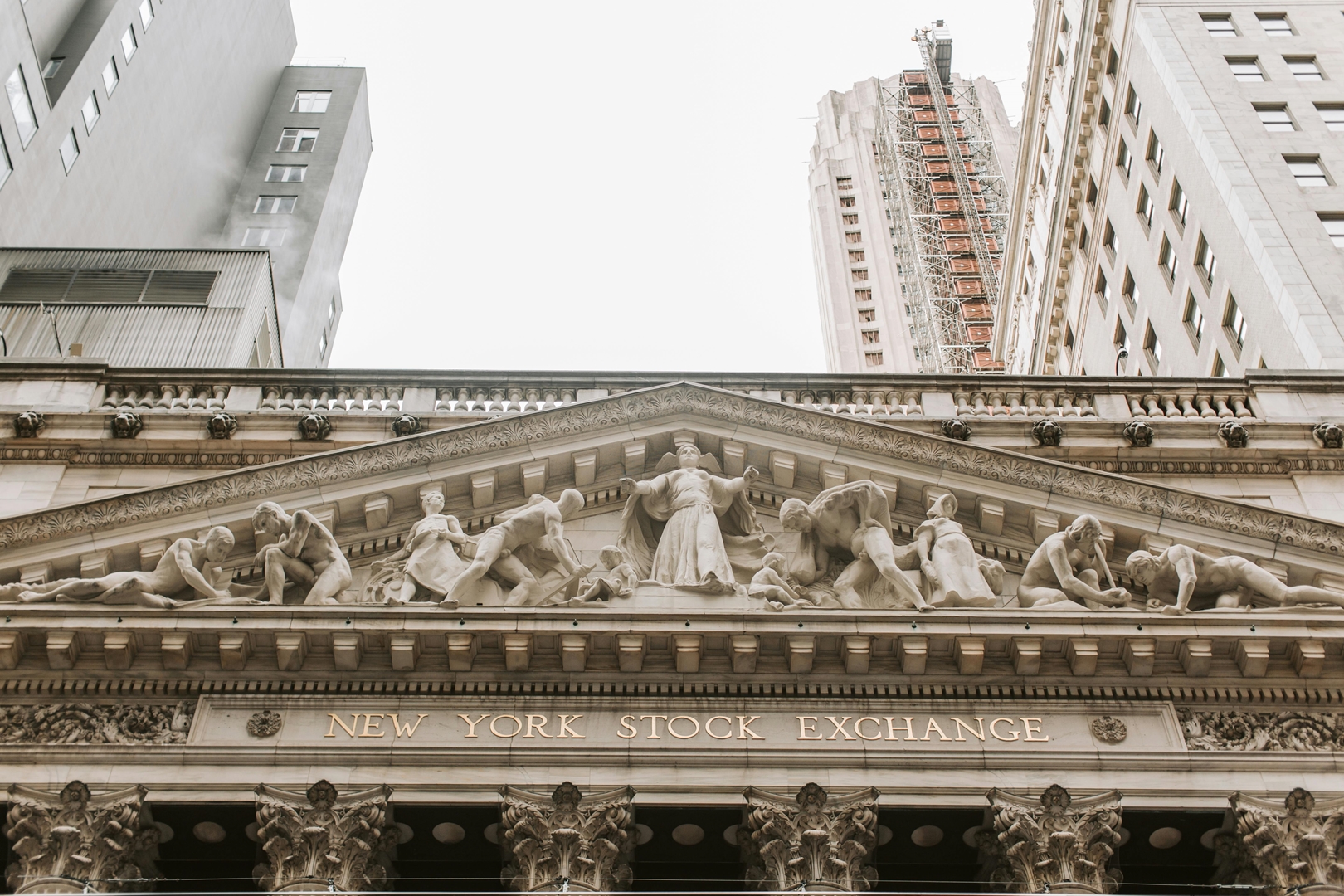
Are corporations across America injecting ideological agendas?
Arguments such as this one have become popular in the US and beyond, and appear to be fuelling the apparent backlash against ESG as an approach to investing, but are they accurate? Can ESG really be considered woke?
The Simple Definition
According to the Cambridge English Dictionary, the term woke describes something or someone that is “aware, especially of social problems such as racism and inequality”, and there are therefore grounds to argue that ESG can indeed be labelled as a woke concept as it necessitates awareness of certain issues, including inequality. The same applies for ESG investment professionals, given their knowledge of such topics as individuals.

Does it take more than awareness to be 'woke'?
However, with that being said, is this perhaps an overly simplistic view? The term woke seems to have evolved beyond the definition provided by Cambridge, with it now seemingly being used to describe a person or entity that actively seeks social change. Whether ESG fits this definition, however, depends on the specific approach to ESG that is taken.
A Question of Materiality - Outward Risks
There are two primary approaches when it comes to ESG investing, with these being differentiated by the type of risks that are considered - outward risks and inward risks.
Considering outward risks associated with companies and their activities is about more than considering risks to profitability - it involves considering the risks that companies pose to stakeholders such as employees, communities, and the environment. If an investor deems these risks to be too high, they may choose not to invest in a company, engage with a company they have holdings in, or even divest any existing holdings.
While this approach can help limit risks related to returns on investment (companies that might heavily impact on communities can be subject to legal proceedings that affect profitability, for example), it can also be based on pre-established boundaries based on ethics or beliefs. A fund provider might, for example, decide that they are not happy to invest in companies that fail to adequately limit their environmental impacts for no other reason than they do not want to support (and profit from) the actions of such companies.

Failures to limit emissions can cause some investors to divest.
Such an approach would almost certainly be viewed by most as woke, but what about an approach that considers only inward risks?
A Question of Materiality - Inward Risks
When approached from an inward materiality angle, ESG is still fundamentally a tool for the identification, limitation, and mitigation of risks to returns. In the same way as the construction of a non-ESG investment funds would involve considering factors such as company finances and operations to ensure the viability of the fund, the construction of an ESG fund would consider non-financial factors (in addition to financial factors) for the exact same reason.
When based on single materiality only, ESG is just another approach to try and maximise returns on investments by avoiding risks deemed to be unacceptable, which is not something ever described as woke. Herein lies an irony - DeSantis and Trustees of the State Board of Administration stated in their 2023 announcement that their protection measures were designed to ensure “that all investment decisions focus solely on maximizing the highest rate of return”, which is something that ESG integration can help to achieve.
Furthermore, this emphasis on risks to returns is another reason why ESG has even drawn criticism from those who support the idea of responsible and sustainable investing. It is suggested that ESG based on single materiality is not a tool to drive sustainability and change, but simply a way of securing financial returns.
Is ESG just another way to maximise returns?
Take the example of a company which sells shale gas that it obtains via hydraulic fracturing (“fracking”). This fuel is rarely even justified as necessary in the short-term as part of the energy transition, and there are major concerns regarding the impacts of its extraction. Nevertheless, this company has been awarded a higher ESG rating when compared to a renewable energy company, even in terms of its environmental score.
The reason for this could be that assets belonging to the shale gas company are based in regions that are at low risk of impacts from climate change, whereas the renewable energy company has solar farms in areas that are at risk of flooding, and that are seeing risks of flooding grow as a result of climate change. As such, the profitability of the renewable energy company - and its ability to generate secure returns in the long-run - is at greater risk when compared to the shale gas company, which results in a lower ESG score.
The decision to invest in this hypothetical shale gas company would not be considered by most as woke, but instead seen as the exact opposite, and so based on this, can ESG even be argued to be “anti-woke” in some instances? Given that ESG appears to still primarily be used as a risk management tool, there is surely a case for this.
To Conclude
Answering the question “is ESG woke?” is not easy to do, as the answer depends on how “woke” is defined, and the specific approach to ESG that is taken. As it is, for us in the sustainable investment space, a more important question is perhaps “what do we want to achieve?”. Regardless of whether ESG can be defined as woke or not, capital markets have a role to play in securing a sustainable and more equitable future for us all, and we have to decide if we want to be part of that, and whether ESG can help us in this.